Friday, May 30, 2025

Paigia the Butterfly Fairy coloring page

 This is my free coloring pages blog.

Today's new drawing is of a Butterfly Fairy named Paige.


Paige the Butterfly Fairy

Paige is a Butterfly Fairy.  She is seen here in her mortal size.  All Fairies can morph into mortal size when they wish to or need to.  Paige is seen here wading in the water.  She is looking for watercress.  In Scotland, watercress was and is used as food.  But it is also a treatment for the flu, the common cold, and fevers.  

This Fairy, Paige, is a beautiful Healer Fairy.  She is out gathering herbs for Fairy Medicine.  Yes, she is exceptionally beautiful, but that is because she has a kind heart.  Kindness in a person or a Fairy magnifies their beauty.  Well, that is true if the beholder is also a kind person.  Unkind people don't see that, but kind people... or kind Fairies couldn't care less what unkind, vain people think. 

Fairies are perceived as beautiful because almost all Fairies are kind beings.  Also, Fairies almost never appear to a bad person.  Fairies have a sense that allows them to identify kind vs unkind mortals.  So only kind mortals get to see Fairies.  

NOTE:  This drawing in printable form is found by clicking on the button labeled "Fantasy, Myths, and Circus."  Then scroll down to the bottom of the drop-down menu.  This menu is a list of titles.  IF you are accessing this page in late May to mid-June 2025, then this drawing will be at or near the bottom of the list.  Have fun coloring this beautiful on many levels, Healer Fairy!

Dibujo de Protathlitis un Spinosaurio nuevo de España para colorear

 Este es mi blog de páginas para colorear gratis.


Aquí encontrarás más de 3000 páginas para colorear que dibujé para ti.
Siéntase libre de imprimir páginas para que los adultos o los niños las coloreen.
El nuevo dibujo de hoy es de un espinosaurio descubierto recientemente.


Protathlitis a Spinosaur
Protathlitis un Spinosaurio 
Es un Spinosaurio nuevo de España 


Esta es una especie de dinosaurio recientemente identificada. Se llama Protatlitis cantonensis. Vivió en lo que hoy es España. Recibió su nombre de un campeonato de fútbol. Campeón es lo que significa Protatlitis. Cantonensis honra a la ciudad cercana en España donde se encontraron los fósiles.

La protatlitis medía alrededor de 33-36 pies de largo. Eso es 10-11 metros. Probablemente era un devorador de peces como otros espinosaurios. Su tamaño coincide con el tamaño del Suchomimus más conocido. La protatlitis vivió a principios del período Cretácico.

NOTA: Este dibujo se puede encontrar en forma imprimible haciendo clic en el botón etiquetado "Paleontology." Luego desplácese hacia abajo hasta la parte inferior de la sección mesozoica de la lista de dibujos, "Protathlitis a Spinosaur ." Si accede a esta página desde finales de mayo hasta mediados de junio de 2025, este dibujo estará en la parte inferior de los dibujos mesozoicos.

Thursday, May 29, 2025

Protathlitis a New Spinosaur from Spain coloring page

 This is my free coloring pages blog.

Here you will find over 3000 coloring pages that I drew for you.

Feel free to print pages for adults or kids to color.

Today's new drawing is of a rather recently discovered Spinosaur..


Protathlitis a Spinosaur 
(from Spain)


This is a recently identified species of Spinosaur.  It is called Protahlitis cintorrensis.  It lived in what is now Spain.  It was named after a soccer championship.  Champion is what Protathlitis stands for.  Cintorrensis honors the nearby town in Spain where the fossils were found.  


Protathlitis was around 33-36 feet long.  That is 10-11 meters.  It was probably a fish-eater like other Spinosaurs.  It size matches the size of the better-known Suchomimus.  Protathlitis lived in the Early Cretaceous Period.  

NOTE:  This drawing can be found in printable form by clicking on the button labeled "Paleontology."  Then scroll down to the bottom of the Mesozoic section of the list of drawings.  IF you are accessing this page in late May to mid June of 2025 then this drawing will be at the bottom of the Mesozoic drawings.   

Sunday, May 25, 2025

Memorial Day 2025 M-60 Main Battle Tank etc. coloring pages

 This is my free coloring pages blog. 

All drawings were done by me, Robin Lyman, except for a few 

drawn by a grandnephew and a grandniece, plus today one by my grandson. 


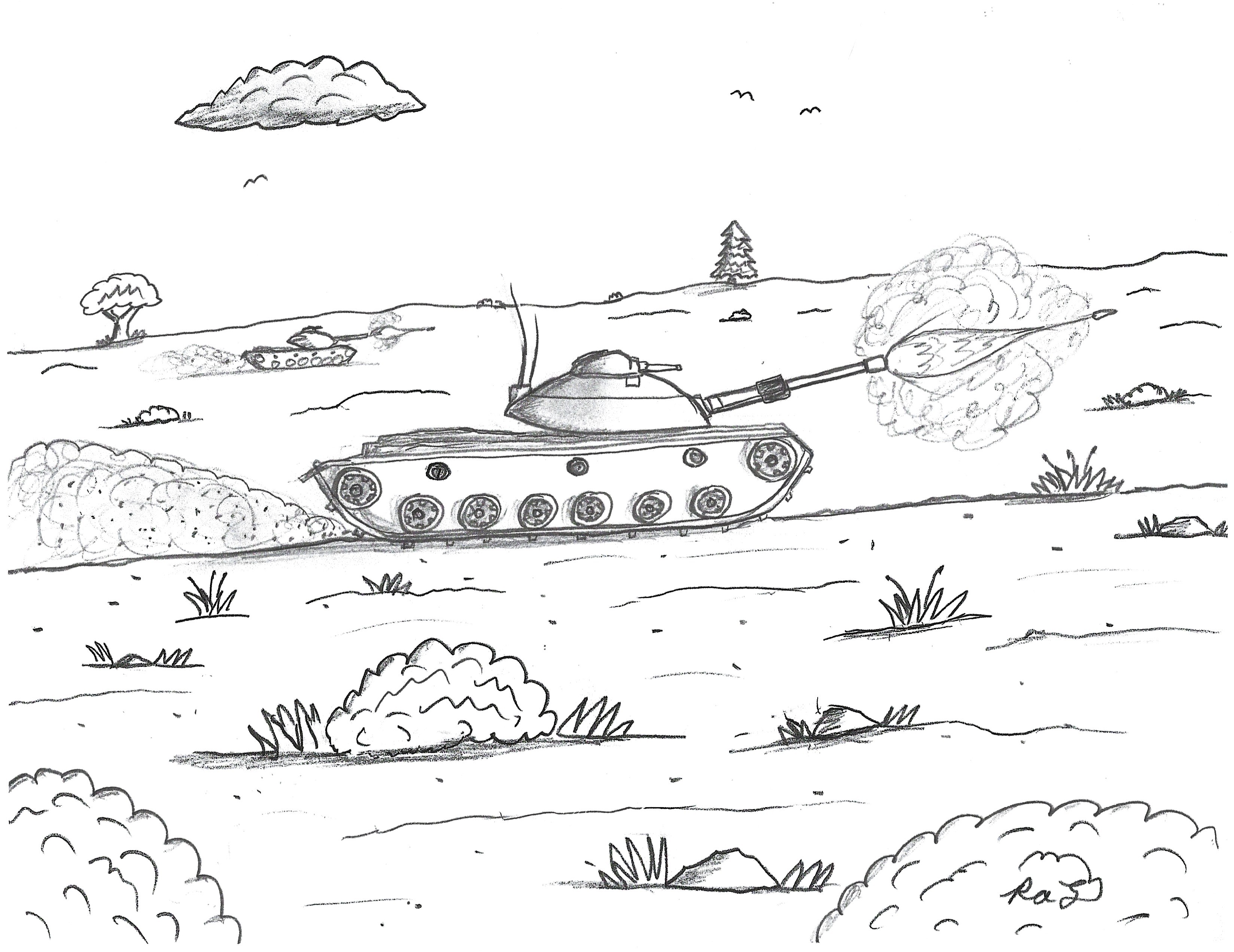
M-60 Patton Main Battle Tank

The M-60 was the tank that the US Army used when I was a boy.  I even had a few toy plastic versions.  I actually drew this primarily from that type of toy M-60 Patton Tank.  This tank is retired from active duty in the US Army and Marines, however, some reserve outfits still have some.  These tanks are also still used by several of our foreign allies.  The M-60 was replaced with the Abrams Main Battle Tank.

The M-60 weighed 60 tons. It was 32 feet 4 inches long.  It was 13 feet 6 inches wide.  It was 12 feet 6 inches tall.  I guess I should say that it IS those dimensions since it is not completely retired from service. It can travel at 30 mph.  It has a main armament of a 105 mm rifled cannon. There are 63 rounds for the cannon that can be stored in the tank. The secondary armament is a .50 caliber machine gun with 900 rounds. 

The M-60 was built from 1963 to 1980. There have been several upgrades or modifications to this tank.

By the way, it is named after General George S. Patton, who was a great American general from World War II.  He was an expert in tank warfare. 


Below is a Tank or Paladin drawing by my grandson, Simon.  He is 7 so this is quite good for a 7-year old.  

Simon's Paladins with Apache Helicopter


NOTE: These drawings in printable form can be found by clicking on the button that says "Vehicles and Military Vehicles."  Then scroll down to the bottom of the list of drawings, IF you are accessing this page in mid-May, 2025.  If you are accessing this page later than mid-May, then the printable pages will be further up the list.  

Thursday, May 22, 2025

Pania the New Zealand Mermaid with Hector's Dolphin or Pania of the Reef coloring page

 This is my free coloring pages blog.

I have drawn over 3000 pictures for you to print and color for free. 

People have permission to print and color these pictures for kids or adults to color.

Today I have drawn and now post a picture from a New Zealand Maori legend.

It is of Pania of the Reef, a New Zealand Mermaid.

She is seen with a dolphin that is only found in New Zealand...

Hector's Dolphin.


Post publication note:  I noticed some problems so I changed several parts of the drawing, including the face, body shape, plus I added a sea turtle.  So, I posted that drawing after the first one.


Pania the New Zealand Mermaid with Hector's Dolphin

(Also known as Pania of the Reef)


Pania the New Zealand Mermaid with Hector's Dolphin - modified

(Also known as Pania of the Reef)   

This is the modified version.  You can decide which do you like most.

The Maori culture tells of mischievous and kind merpeople.    It also tells of some that are sirens that lead sailors to their doom.  I like the idea of benevolent merpeople.  In fact, I like to think that the times merpeople lure a sailor to their doom is because the sailor is an evil person, like a bloodthirsty pirate. 

One legend tells of Pania, who was a mermaid who spent her days out on the reef, in the ocean, and her nights were spent with her husband and family on land. Her husband was the son of a Maori chief.  I like this legend because I like to think that merpeople COULD be able to transform themselves into mortal human form.  I also like to think that they could intermarry with humans if both parties wished to marry.

Hector's Dolphin is the world's smallest dolphin. It is only 3 feet 11 inches to 5 feet 3 inches long.  That is 1.2 to 1.6 meters in length.  They weigh between 88 and 132 lbs.  That is 40 to 60 kg.  They can live for up to 22 years or more.  They become sexually mature, so they can reproduce around 6-9 years old.  Males are sexually mature about a year before females are. Females give live birth and nurse their calf for about a year.  Females continue to reproduce about every 2-3 years up to the end of their lives. There is a Maui subspecies that sometimes interbreeds in border waters where territory overlaps. 

 You must be able to identify the sea turtle. Considering its size and location near New Zealand, it must be an Olive Ridley Sea Turtle.  They are only about two feet or around 0.6 meters long. They are a very critically endangered species. 


NOTE:  This drawing is found in printable form by clicking on either the "Fantasy" button or the "Animals" button.  Then scroll down to this title.  It should be at or near the bottom of the list of drawing titles IF you are accessing this page in May of 2025.  I hope you enjoy coloring this mermaid and the other marine life that is seen with her.  Do you see the clownfish?  Do you see the jellyfish?  Do you see the tiny shark?  Do you see the other reef fish?  Do you see the small, young tuna?

For fun you might want to try to locate all the differences in the two drawings.   Below is a list but probably not a comprehensive list:  


sea turtle    wider body     face shape     hair is curly in one drawing and straight in the other

more bubbles    one more layer of sediment in the continental shelf      more and wider hair

more and longer tentacles on Portuguese Man O War      shadow on throat     eye shape

eyebrows        nose shape      nose has shadown       dolphin makings or shading


Monday, May 19, 2025

Smaller Theropods & Pterosaurs of the 3 Periods of the Mesozoic Era coloring pages

NOTE:  If you are looking for the Grace n Chase drawing, then scroll down past this entry.


This is my free coloring pages blog. 

Today's new drawings are of three Theropod Dinosaurs. 

These 3 dinosaur drawings are from the three Periods of dinosaurs...

The first was the Triassic Period.  Then the Jurassic Period.  Then, last of all, the Cretaceous Period.

These three Periods are what make up the Mesozoic Era.


Coelophysis in the Desert

These three drawings are of Theropod dinosaurs.  Theropods were the dinosaurs that were carnivores.  Well, most of them were carnivores.  Theropods included enormous predators like Allosaurus and T. rex.  But these three  Theropod dinosaurs are smaller in comparison.  

Coelophysis was one of the very first dinosaurs.  This genus of dinosaurs lived on Earth for around 14 million years, and that is a lot for any genus or species.  It lived from 215 million years ago to 201 million years ago. So this Theropod dinosaur lived in the late Triassic Period and on into the early Jurassic Period. Most of its existence was during the Triassic Period.  It is thought that Coelophysis did NOT have feathers like the later small raptor dinosaurs.

It was 9.8 feet long... so about 10 feet long.  That is around 3 meters long.  It was slender and lived in many parts of North America.  I have seen a skull of this dinosaur embedded in the rock in Eastern Utah at the Saints and Sinner Quarry that was being excavated by Brigham Young University (my alma mater).  This quarry is in an area that looks like the desert in this scene.  In fact, this WAS a desert in the Triassic Period. 

The Pterosaur seen is a Caelestiventus.  It was a very early Pterosaur of the late Triassic.  It was a Pterosaur that lived in a desert climate and which was unusual. It had a wingspan of about 5 feet or 1.5 meters wide.  It had a pelican-like pouch, but you can not see it from this angle.   Caelestiventus possibly ate lake fish at oases, but since it lived in the desert, it probably fed on lizards, etc., most of the time.  This is one of the earliest known Pterosaurs.

Of course, the Triassic was the first Period of the Mesozoic Era. Then there was the Jurassic Period, and finally the Cretaceous Period.  The next drawing is of a Jurassic Theropod. 


Young Dilophosaurus by a Forest Stream

Dilophosaurus was a 23-foot or 7-meter-long Theropod of the early Jurassic Period.  It was actually the largest predator and top of the food chain during the early Jurassic.  Later on in the Jurassic Period, there were much bigger carnivorous dinosaurs.  Dilophosaurus had a double-crest on its skull.  It was probably a pack hunter. They were around 900 lbs.  They probably preyed on several forms of dinosaurs and mammals and possibly even fish. 

The Pterosaur you see flying is called Dimorphodon.  It was an early Jurassic Pterosaur with a wingspan of 4.6 feet or 1.45 meters.  It probably fed on small terrestrial animals and carrion.  It might have also eaten fish. 

As the title says, this is a YOUNG Dilophosaurus.  It has the dimensions and head-to-body ratio of a juvenile, although not a newly hatched juvenile Dilophosaurus. A full-grown adult would have a smaller head in relation to the body.  

The next drawing is of a Cretaceous Theropod - a small one. 


Atrociraptor near a Volcano

Atrociraptor was a smallish Theropod raptor from the late Cretaceous. It was up to 6.6 feet long.  That is around 2 meters long.  It was unique in that it had the unique feature of teeth that pointed more backward, presumably for holding onto small prey.  It also had a deeper skull than most of the raptor dinosaurs.  It is thought that it had more advanced feathers, like all raptor dinosaurs are now assumed to have had. 

It lived in multiple environments, including scrublands and floodplains. It very likely preyed on mammals and other smaller invertebrates like lizards. By the late Cretaceous Period, there were a lot of small mammals around that could have been prey of Atrociraptor. 


NOTE:  These drawings, in printable form, can be found by clicking on the button labeled "Paleontology."  Then scroll down to the bottom of the list of Mesozoic Life drawings.  IF you are accessing this in May of 2025, then this set of drawings will be the last titles on the list. 

Sunday, May 18, 2025

Chase & Grace Elven Newlyweds coloring page

 This is my free coloring pages blog.

There are well over 3000 of my drawings here for you to print and color...

...or for your kids to color. 

Anyone may print these drawings for people - young or old -  to color.

Today's new drawing is of a pair of Elven Newlyweds.


Chase & Grace Elven Newlyweds

Chase and Grace are Elven newlyweds.  They were recently married.  They love each other and are best friends as well.  More importantly, they understand that the closer they are to The One, the closer they are to each other. Yes, Elves believe in one God and in eternal loving marriage in Valinor.

Grace is truly beautiful on all levels. She is a little shorter than many Elf Maidens.  This is because, back in her ancestry, you would find that Grace has a Hobbit ancestor.  Remember that true beauty is in the soul.  A kind heart and soul enhance the perception of physical beauty, particularly to other people with kind souls. Chase is also a beautiful Elf Warrior.  Remember that Elves are not short.  In fact, 

Chase is particularly tall, even for an Elf.  Chase actually has a tall Ranger back in his ancestry. Like his bride, he is attractive and particularly handsome because he possesses a kind soul. Chase is an Elven Warrior, so he is ceremoniously wearing Elven armor and carries an Elven shield.  He also has an Elven sword tucked into his decorative sash.  His Elven shield is marked with Ch for Chase and G for Grace.


NOTE: To print this drawing, just press the "Fantasy, Myths, and Circus" button.  Then scroll down to the bottom of the list of drawings.  IF you are accessing this page during mid to late May, 2025, then the title of this drawing can be found there at the bottom of the list.  Just click on the title and print. Have fun coloring this beautiful newlywed Elven couple.