Thursday, September 5, 2019

Suchomimus and Saltwater Crocodiles

Suchomimus by a River

Saltwater Crocodile in the Outback

I am posting these two animal drawings together because both were or are primarily aquatic reptiles that hunted in the water.   They had some real similarities.  They both were or are very large predators.   They both can sense movement in water.  Both had or have scales. . . etc. . . 

Suchomimus was a large Theropod dinosaur that lived in Africa in the Early Cretaceous Period.  It grew to be up to 36 feet or 11 meters long.  It was related to a Spinosaurs.  In fact it is considered a type of Spinosaur.  But Suchomimus did not have a sail on its back.  It DID ha e a long narrow snout with motion sensors in the tip.   It also had saber-like claws on the inside finger of each hand.  Spinosaurs were big and scary, but they had a relatively weak bite.  That claw was probably used to fillet fish.  There IS evidence that Spinosaurs were piscavores.  That means they ate primarily fish.   With their motion sensors in their snout the Spinosaurs could sense fish in the water.  

Saltwater Crocodiles are still with us.  We saw several in Northern Territory, Australia.  They are an awesome sight!  They can grow to be up to 20 feet or 6 meters.  The largest we saw was 17 feet long and beleive me it was impressive.   Saltwater crocs can handle living in brackish rivers and the regular ocean water.   They can and will eat almost anything, including other predators like sharks.  They are ambush predators and will drown land animals that they catch on or near river banks or on beaches.  Once in a while people are taken as well.  They actually have a safety net surrounding at least one of the beaches in Darwin, NT, Australia.  It keeps the crocs out so swimming is completely safe.   Salwater crocodiles live primarily around northern Australia and around the islands north of Australia.  This type of crocodile is also called an Estuarine Crocodile.

Salties have an incredibly powerful bite.  Thier bite force has been measured at 16,414 Newtons.  (That is 3,690 pounds of force.)   This is probably about the same as  the jaw biting force of Spinosaurs.  As amazing as that is realize that T. rex probably had a bite force way more at around 53,000 Newtons!  Spinosaurs were evolved to catch and eat fish, not to crush bone like T. rex did.
Still, when you see and hear a saltie or Saltwater croc snap its jaws it is scarily impressive!

Here are some photos I took of Saltwater Crcocodies, in Australia, Northern Territory.  Some are from Kakadu National Park.  Some are from Crocodylus Park in Darwin.   

NOTE:  The drawings are found by clicking on the correct button up top.  Scroll to the bottom of the list for new drawings like these two drawings at the top of today's blog entry.  


Males are way bigger than the females.  This male was 5.1 meters long.  


Saltwater Croc in River

I think this is a female.  Same as the above photo. 


When its jaws snapped shut it was really really loud!


Sunnset at Mindil Beach in Darwin, Northern Territory.  No one got eaten.
  I don't think that this beach  has a net.  But it has a Sunset Market 
and absolutely amazing sunsets!

This is actually a Freshwater Crocodile. 
 It was seen in Kakadu National Park, Katherine Gorge.


Close up of the same croc. 

Salt Water Crocodile by a River
Yes I know I should have made Salt Water a compound word. 
This was drawn on the plane.  It has already been posted before.
The top two drawings on today's blog post were drawn as follows...
The crocodile drawn AFTER seeing crocs in the wild while we were
still in Australia.  The Suchomimus drawn after we took our grandkids
to the Museum of Ancient Life in Lehi, Utah.  It was drawn this week. 

Suchomimus skull and arm and Claw at Museum of Ancient Life
Let me tell you something that gave me a laugh.  I typed in the name of
this dinosaur, Suchomimus, and spell check called it:  "Such ominus."   
Now, that is incorrect, but also correct.  
At 36 feet long, Suchomimus WAS very ominus!
I mean, look at that huge claw!


Sunday, September 1, 2019

Plesiosaurs of the Opal Mines


I know that this sounds rediulous if you don't undersstand Plate Tectonics, but once many parts of the world that are now part of continents were part of the ocean floor.  Coober Pedy is one of those places.  The opal miners find fossilized marine animal parts in the rock.

This first picture has a Belemnite in or near the center.  Belemnites were related to squid.  But Belemnites had a hard bone-like cone shaped core.  This core sometimes got fossilized and sometimes was opalized in the process.  Those cores are beautiful.  Below the drawing is a photo of some opalized Belemnite cores we saw at the Umoona Opal Mine and Museum in Coober Pedy, South Australia.   The core is called the rostrum.  The largest ever found was found in Indonesia and the rostrum was 46 cm long. . . or 18 in.   That means the animal total size was probably about 5 meters long.  That is about 16 feet long.   But there were also Belemnites that were only a few cm or a few inches long.  Interestingly enough, the name Belemnite comes from the Greek word for Javelin.  The ancient Greeks thought that Belemnites were the tips of javelins or spears thrown down from Mount Olympus by the gods. 


Belemnite about to be eaten by a Plesiosaur


Opalized Belemnite Cores
(from Umoona Opal Mine and Museum)


This next drawing is of a mother and calf Plesiosaur called Elasmosaurus. They are swimming in shallow water above a coral reef area.  Below them is coral, sea anemone, some ocean plants and some kelp.  .   .  along with  a crab, shellfish, and some fish & etc.   Elasmosaurus was a long necked Plesiosaur.   It was around 36 feet long or about 11 meters long.   


Elasmosaurus mother with Calf

This next drawing is of some Plesiosaurs being hunted by a Pliosaur.  Pliosaurs are short necked Plesiosaurs.  The Pliosaur is Kronosaurus.  It was 42 feet long. . . or about 13 meters long.  Pliosaurs include Liopleurodon. .  We saw one at the Harvard Museum in Boston 15 years ago.  The fossilized skeleton was absolutely amazing.  I am adding an old photo of Kronosaurus from when it was first put on display in the Harvard Museum in 1959 I think.   The scientific name for Kronosaurus is
Kronosaurus queenslandicus.  It was found in the Australian state of Queensland by a Station owner.  A station is what a ranch is called in Australia.  They raise beef cattle.  


Kronosaurus hunting Pliosaurs


Kronosaurus on display at the Harvard Museum 

This last drawing is of Eric the opalized Plesiosaur.  He had a shorter neck but not the huge head of a Pliosaur so he is considered a Plesiosaur still.  It was only about 8 feet long nose to tail.  That is 2.5 meters long.  It had a remarkably short neck compared to other Plesiosaurs.   Eric was the name given to the only known Umoonasaurus fossil and he was found in a Coober Pedy opal mine.  Because this streamlined body shape is useful for swimming.  .   . this marine reptile looks a bit like a seal or sea lion.  This is called convergent evolution.  But Umoonasaurus was NOT a mammal. . . nor was Eric related to sea lions or seals.   He was a marine reptile.  In fact he is more closely related to a turtle or Salt Water Crocodile than a seal.   


Eric the Umoonasaurus


NOTE:   The printable versions are found by clicking the buttons up top labled . . . . . . .
. . . . . Paleontology. . . . . Australian Animals. . . . . or . . . . All Printables. 
Also, all drawings of mine on this site are Copyright 2014-2019  but permission to print for children to color is granted for non-commercial uses.  In other words, I WANT kids (or adults) to color these drawings.  I am fine with cruise lines, schools, daycares, etc. using my drawings.  And of course private citizens are welcome to use them as well.  What is NOT allowed is for someone other than me to sell them or market a coloring book with my drawings without my permission.   I have made coloringng books but never sold them.   


Friday, August 30, 2019

Opal Fairy and Umoona Opal Mine

Opal Fairy

While in Coober Pedy South Australia we met the Opal Fairy.  She was a beautiful Fairy visiting from the Philippines or Malaysia I think.  Her job is to guard the opals in vairous places in Coober Pedy.  This includes the Umoona Opal Mine.  Only those who own the mine or home are allowed to take opals unless they buy or are given an opla from an authorized owner.  

In Coober Pedy people have built houses, churches, etc. underground or more accurately in the rock.  When they expand their house and chip out a bedroom they often \find thousands of dollars of opals. 

The pattern on the wall behind her is the rock pattern seen in the Umoona Opal Mine.   This is an amazing place.  The rocks alone are so beautiful that we were spellbound.  We stayed at the Majestic Oasis Apartments.  We got to sleep underground or more correctly IN the rock.   

Tomorrow I will add some more about Coober Pedy and some amazing fossilized Marine Reptiles AKA Sea Monsters from  Coober Pedy.  And it is not even near the ocean now.

Belemnite Cores that are Opalized

NOTE:  Printable version of this picture found by clicking on top buttons labled either....
....... All Printables. . . . . or . . . . Fantasy, Myths and Circus.   

Tuesday, August 27, 2019

Vespersaurus the Raptor with two killer claws.

Vespersaurus

Vespersaurus was a small raptor type of dinosaur with a unique feature.  Other raptors with a killer toe claw walked on two toes and kept one toe in the air to keep the killer claw sharp.  Vespersaurus walked on ONE toe and kept TWO toes with killer claws off the ground.   They even found footprints in the same rock formation that showed this.  They found the footprints BEFORE they found the fossilized bones.   This was the Rio Parana' formation in Brazil.   

This killer dinosaur could slash prey with FOUR claws.   It was about 5 feet (1.5 meters) long.  It was about 2.6 feet (0.8 meters) tall.  It lived in a desert area in what is now Brazil.  It may have been covered in scales or perhaps feathers.  So I drew it both ways.   With the find of feathered dinosaurs in China several years ago, the current theories support the idea that most if not all Raptor dinosaurs had feathers.  Some paleontologists even think the larger Theropods like T. rex also had feathers.  We just have yet to find feather impressions around T. rex bones.  


Vespersaurus with Feathers


Monday, August 26, 2019

Polynesian Mermnaid

Polynesian Mermaid

The mermaid is part of several of the Polynesian cultures.  Some are part human part fish.  Some are part human part dolphin.  There are even stories of some who are part octopus.  The model for this drawing is a young woman who goes to our church.   Of course the model is all human.  The outfit this mermaid is wearing is made of kelp leaves.  

Note:  This blog is free.  Printing drawings is free.  There are also no ads.   I started this free coloring pages blog when I was forced to retire due to health issues.  I WAS a Jr. High Science Teacher.  I ran a Fantasy and Sci Fi Club for 16 years at my Jr. High School.  I have always been interested in Fantasy and Science Fiction.   Today's mermaid drawing is found in printable form by clicking on the buttons up top labeled either . . . . . . .  . .All Printables . . . . . . or . . . . .  Fantasy, Myths, and Circus.  

Saturday, August 24, 2019

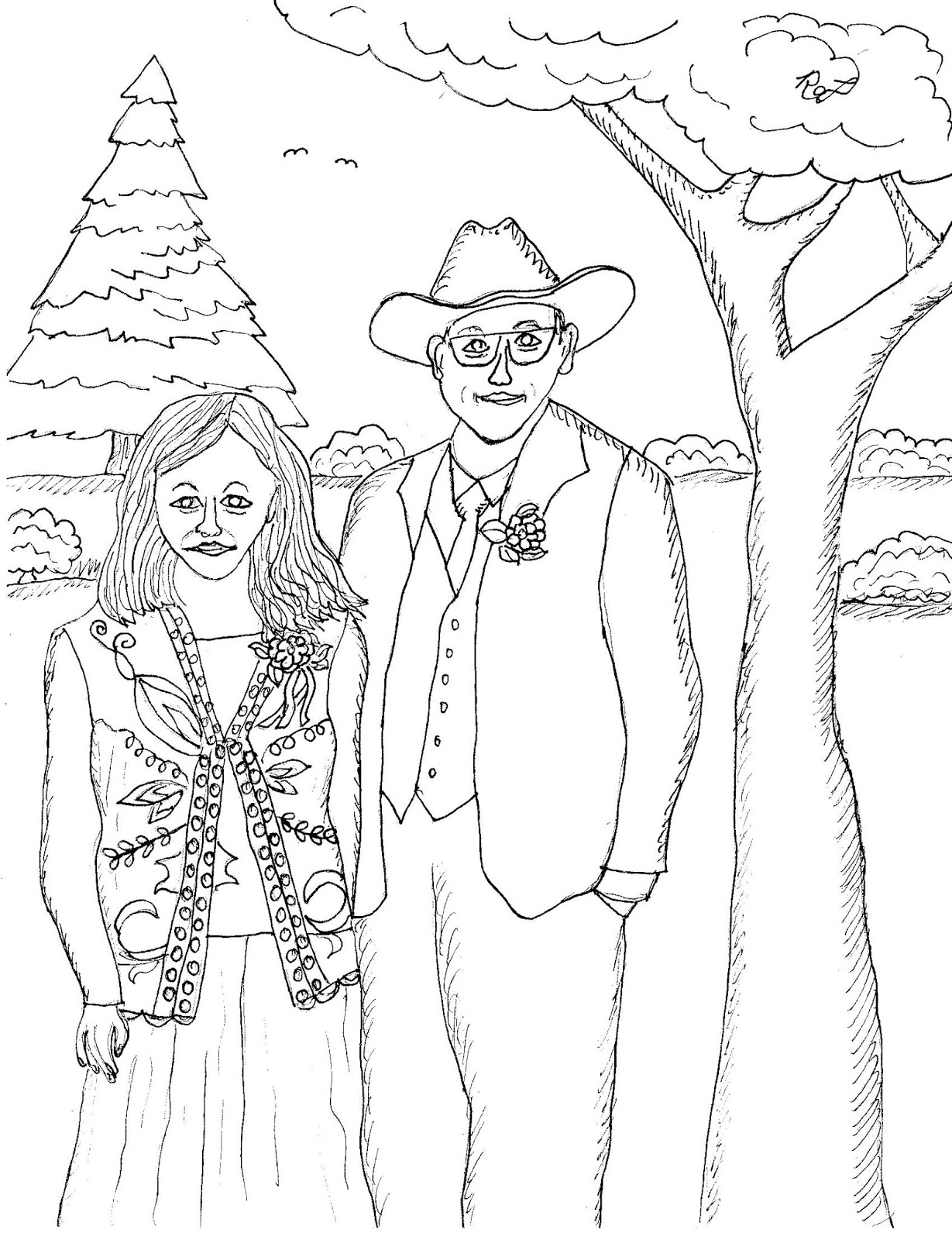
MIke and Tracy get Married!


Mike and Tracy

My friends Mike and Tracy got marreid to day in the Provo City Center Temple of The Church of Jesus Christ of Latter Day Saints.  It was a beautiful wedding ceromony and the reception was also great.  They did pie instead of wedding cake.   And the pie was awesome!   There were several types of pie!    

We believe that a man and woman can be sealed for Time and All Eternity in one of God's Temples.  This is NOT a wedding "til death do we part."  I have found rhat many people believe in Eternal Marriage.  Their church may not teach it, but they believe that they will be with their spouse in the next life.  In fact, even Emma Darwin, the very religious wife of Charles Darwin, said the following in a letter to her husband:  
     "You are my prime treasure and always will be."  
And she also said that she would hardly be able to handle it if they were not together in heaven.   
That second one is not an exact quote but it was something like that and it was in a letter to her husband Charles.  
     
Mike and Tracy, keep being each other's prime treasure!   

Note:  The printable version of this page is found under the buttons up top labeled "All Printables" and "Religious."  Scroll down to the bottom of the list for this new drawing.   The original photo of them is from the Temple steps, but I chose to put a nature background in my drawing.  Tracy's wedding dress had lovely lace on the top that I approximated in my drawing. 


Friday, August 23, 2019

Red Kangaroo

NOTE:  This blog is a free coloring page blog.  There are no ads on this blog and there are no fees to print a coloring page. Use the buttons up top to access the free coloring pages by category.  Scroll down to the bottom for new drawings, like this one below.  I am the artist and a retired Science Teacher.  My wife and I just returned from a 26 day trip to Australia, hence there are a lot of recent drawings of animals and people from Australia.  

Red Kangaroo in South Australia

The Red Kangaroo is the biggest of all living species of kangaroos.  The males grow to a total length of up to almost 9 feet long, if you count the tail.  They weigh up to 200 lbs or 90 kg of mass.  The females are about half the weight of the males.  The females are greyish colored and the males are the reddish brown.  Hence the name Red Kangaroo.  They can jump 30 feet or 9 meters in one jump.  The Red Kangaroo is the largest terrestrial or land mammal in Australia.  

This drawing is done from a photo I took at the Sevenhills Cellars Vineyard in South Australia.  I decided to put the kangaroo in a more wild looking environment.  ByT the way, this species is very widespread throughout most but not all of the continent.   This photo, seen below, was taken with a telescopic lens from a small camera because the Red Kangaroo was about 100 yards or 91 meters away.  .   .  so the photo is just a little blurry.   Notice that this kangaroo is reddish brown. . . so he is a male Red Kangaroo.  

Red Kangaroo in Vineyard

Final Note:  The printable vesions of this drawing are found by clicking on the top buttons.  Click on any of these three buttons at the top of the page and scroll down to the bottom to see this new drawing. . . .    So click on. . . . .All Printables . . . . Animals of Australia. . . . or. . . . Animals.